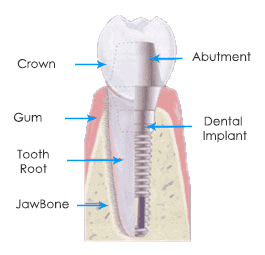
A dental implant is a metal post that replaces a missing tooth root. It is one of dentistry's most recent and effective advancements in restoring normal dental function. Implants enable the replacement of one or more missing teeth. They serve as anchors to attach a single dental crown, as abutments for partial dentures or bridgework, and are used to hold removable dentures in place.
When describing a dental implant, the best comparison is to that of a natural tooth root. The tooth root is the invisible part of the tooth beneath the gumline and embedded in the jawbone. The visible part of the tooth above the gumline is called the crown. The dental implant serves as a replacement only for the tooth root.
When placed in your jaw, an implant becomes securely attached to the bone. The cells in our bone have a strong affinity for the titanium in the implant, and during integration, the implant fuses to the bone. Once this process is complete (typically in 6 weeks to 6 months), we can then attach a crown, bridge, or denture to the implant for a permanent solution.
Dental implants provide the best replacement for missing teeth
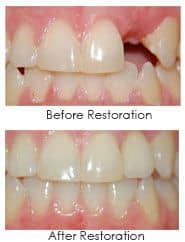 When both the tooth and root are beyond repair, the best permanent option is a single-tooth implant, which combines a dental implant with a ceramic crown. Usually, the implant also has a post or abutment attached to support the ceramic crown.
This solution both looks and functions exactly like a natural tooth. Depending on the patient’s mouth, an immediately functioning temporary tooth can often be placed. This helps achieve an excellent aesthetic result, reduces treatment time, and minimizes pain.
If you are missing a tooth or teeth, or are facing the possibility of losing one, dental implants may be the most natural-looking tooth replacement option. Implants are quickly becoming the preferred choice for replacing missing teeth.
Dental implants can be the ideal solution for individuals wearing complete dentures. As few as two implants may be placed, and either a new denture can be fabricated or the existing one can be retrofitted to attach to the implants. This provides greater stability and retention than traditional complete dentures. Implant-retained dentures (aka. implanted dentures) offer denture wearers a more secure, non-slip fit.
Dental implant alternatives
Alternative options to implant dentistry include cemented (fixed) bridges, removable partial dentures, a combination of fixed and removable options, or complete dentures.
Dental implant procedure time
Depending on your situation, implant dentistry can be completed in 3 to 4 visits over 6 to 8 months. More complex cases may take longer. Under the right circumstances, a tooth can be placed on an implant the same day the implant is inserted. Dental implants look and feel so natural, you might forget you ever lost a tooth.
Dental implant risks
Once an implant is placed, the greatest risk to its success is peri-implant infection, similar to periodontal disease. Ongoing care with our hygiene team is essential for long-term success.
Call First State Dental today to learn more about dental implants.
- Dental implants near Greenville DE
- Implant dentist near Concord Pike